
Single Sign-on (SSO) is an authentication method that lets users log in using Google as the trusted third party. This allows users to use one set of credentials for multiple programs. SSO can also be used to auto provision new accounts for your employees instead of manually creating or inviting them as users.
Please note that you must have a Professional or Enterprise plan subscription to access this feature.
Activate Single Sign-on
To configure SSO for Google:
- Click on the gear icon on the top to head over to the general settings.
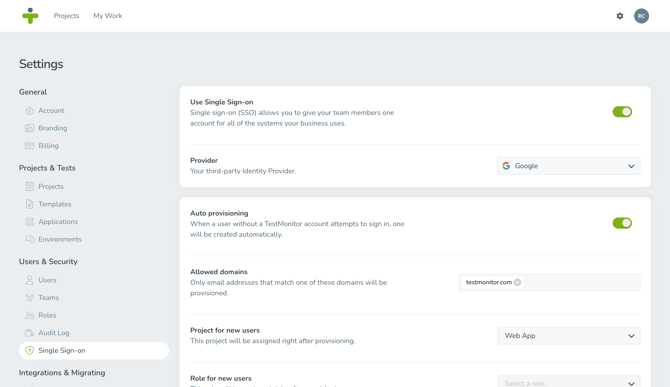
- Under Access & Security in the left menu, select Single Sign-on.
- Toggle the switch to Use Single Sign-on.
- Select Google as your SSO provider. SSO is now activated.
After enabling SSO, we recommend testing the login flow with a non-admin user account to ensure everything works as expected before rolling it out to your organization.
First-Time Login Authorization
When users sign in with Google for the first time, Google will display a one-time authorization prompt. This consent allows the app to access basic profile information (such as name and email) required to complete authentication.
After consent is given, future logins will occur automatically without additional prompts.
Configure Auto Provisioning
Auto provisioning means that if a user without an existing TestMonitor account attempts to sign in, an account will automatically be created for them. If Auto Provisioning is switched off, only users that already have an account in TestMonitor can sign in. If you select to turn auto provisioning on, then you will have additional information you can fill in:
- Allowed domains: Only users with email addresses that match one of these domains will be provisioned.
- Project for new users: This is an optional section to specify which project new users will automatically be provisioned to.
- Role for new users: This is an optional section to specify what role new users will automatically be provisioned to.
Sign in with Single Sign-on
If SSO is configured, you will see Sign in with Google as an option on your TestMonitor login page.
Click this button and, if you haven’t already, fill in the email address and password of your Google account to log in. You are now also automatically logged in to TestMonitor.
Disable Single Sign-on
To disable SSO:
- Click on the gear icon on the top right for Settings.
- Under Access & Security in the left menu, select Single Sign-on.
- Toggle the switch off for Use Single Sign-on.
Troubleshooting
Users are seeing an “app not verified” or “access blocked” message
This usually occurs when:
- The Google Workspace admin has restricted third-party OAuth apps, or
- The app has not yet been authorized within the organization.
Ask the Workspace admin to review and allow the app under Security → API Controls → App Access Control.
A user cannot sign in but others can
Often caused by a mismatch between the user’s Google email and their expected email in your app.
Verify the email address the user is attempting to sign in with. Ensure it matches the email associated with their account (if the account already exists).
The Google consent screen doesn’t appear
If a user has previously denied access, Google may block the authorization silently.
Have the user visit myaccount.google.com/permissions and remove the app. Then try signing in again to trigger a fresh consent screen.